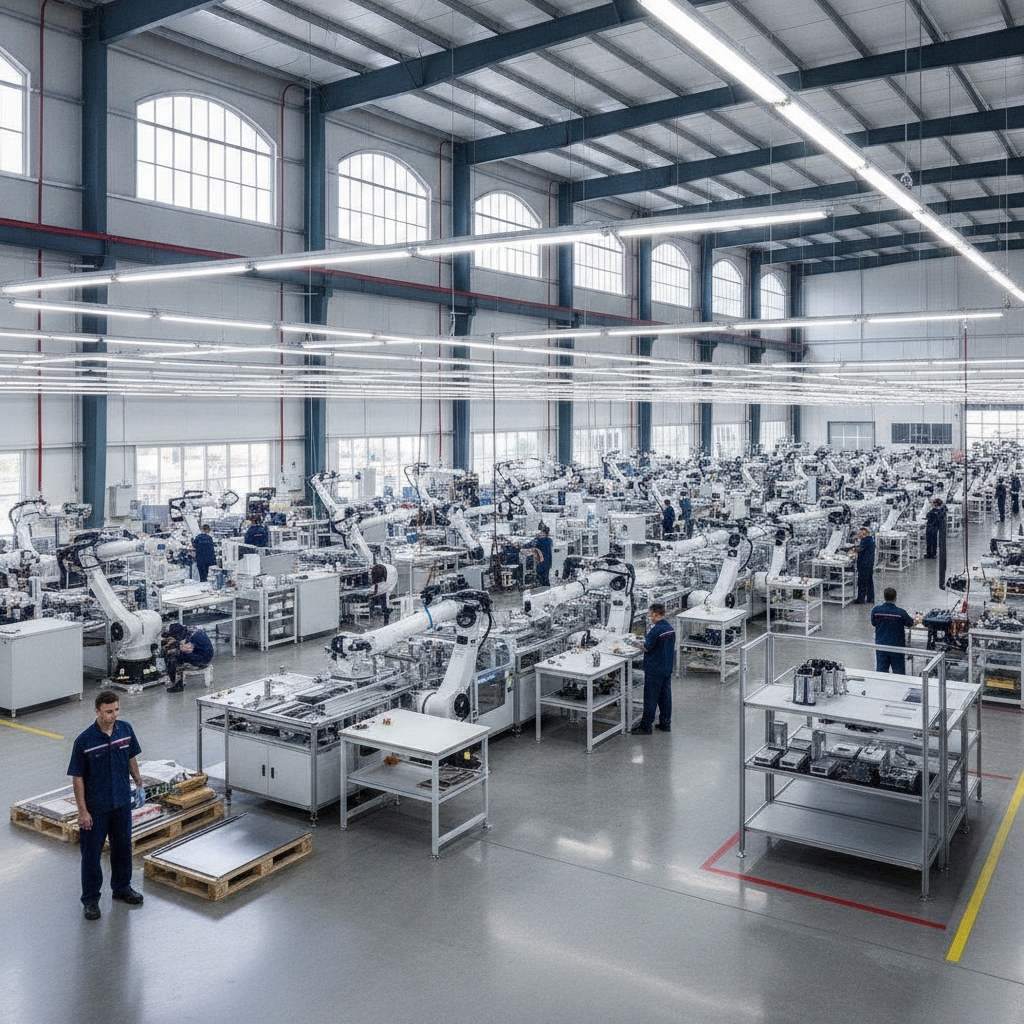
American manufacturers carry a different mix of risk than almost any other kind of business. You are making a physical product, running expensive equipment, employing skilled workers, holding inventory, and shipping goods that end up in someone else's hands. Any one of those activities can produce a claim, and the right insurance program has to account for all of them at once.
If you build, assemble, fabricate, or private-label a product in the United States, this guide walks through the core coverages that belong in a complete manufacturing insurance stack for 2026 and explains what each one actually does.
The Core Coverage Stack for Manufacturers
No two manufacturers are identical, but most well-built programs are assembled from the same building blocks. Here is the stack we help American manufacturers put together.
Product Liability Insurance
This is the coverage most people picture first, and for good reason. Product liability responds when a product you made causes bodily injury or property damage after it leaves your facility. That could be a design defect, a manufacturing defect, or a failure to warn the end user about a hazard.
Because your product can travel anywhere and stay in use for years, product liability is often the single most important coverage a manufacturer carries. Distributors, retailers, and big-box buyers frequently will not stock your product unless you can show this coverage on a certificate.
General Liability Insurance
General liability (GL) covers third-party bodily injury and property damage tied to your premises and operations, rather than the product itself. If a delivery driver slips in your shipping bay, or your crew damages a customer's property during an on-site install, GL is the coverage that responds.
For manufacturers, GL and product liability are usually written together, since the products-completed operations exposure naturally bridges the two.
Commercial Property Insurance
Your building, machinery, raw materials, finished inventory, tools, and business personal property all represent serious value. Commercial property insurance protects those physical assets against covered losses like fire, theft, vandalism, and many weather events.
Many manufacturers also add business interruption (business income) coverage to this policy, which helps replace lost income and cover ongoing expenses if a covered loss forces production to stop.
Equipment Breakdown Insurance
Standard property policies generally exclude mechanical or electrical breakdown, which is exactly the kind of loss that hurts a production line. Equipment breakdown coverage fills that gap. It responds when motors burn out, electrical systems fail, boilers or compressors malfunction, or control systems short.
For a shop that depends on CNC machines, presses, ovens, refrigeration, or automated lines, this coverage can mean the difference between a quick repair and weeks of lost output.
Product Recall Insurance
Product liability pays for injury and damage caused by a defective product, but it generally does not pay to pull that product off shelves. Recall insurance covers the cost of a recall itself: customer notification, retrieval, transportation, disposal, and in many cases replacement or rework, lost gross profit, and crisis communication support.
Food, beverage, supplement, and consumer-product manufacturers are especially exposed here, and many retailers now require recall coverage as a condition of carrying a product.
Workers' Compensation Insurance
If you have employees, workers' compensation is almost certainly required by your state. It covers medical bills and lost wages when a worker is injured on the job, and it protects you from most employee injury lawsuits in return.
Manufacturing involves machinery, lifting, repetitive motion, and material handling, all of which raise injury exposure. A correctly classified workers' comp policy is both a legal requirement and a core protection for your workforce.
Commercial Auto Insurance
If your business owns trucks, vans, or vehicles used to move materials and finished goods, commercial auto covers liability and physical damage tied to those vehicles. Personal auto policies typically exclude business use, so this is not a gap you want to leave open.
Even manufacturers with only a couple of delivery vehicles need this in place, and many also add hired and non-owned auto coverage for situations where employees drive their own cars or rented vehicles for company errands.
Commercial Umbrella Insurance
An umbrella policy sits on top of your general liability, product liability, auto, and employer's liability coverage, adding an extra layer of limit once those underlying policies are exhausted. For manufacturers, a single product claim can climb into seven figures, and many customer contracts now require higher total limits than a base policy provides.
An umbrella is usually the most cost-effective way to reach the limits your largest customers demand.
Why Your Customers Drive Your Coverage
One thing surprises many newer manufacturers: your insurance requirements are often set by the people you sell to, not just by you. Distributors, retailers, e-commerce platforms, and commercial buyers routinely require a certificate of insurance before they will place an order or sign a supply agreement.
These contracts commonly spell out:
- Minimum limits for general and product liability, often with a combined umbrella requirement.
- Additional insured status, naming the retailer or distributor on your policy.
- Specific coverages such as product recall or completed-operations.
- Waivers of subrogation and primary-and-noncovering wording.
If your policy does not match what the contract requires, the deal can stall. Building your program with these requirements in mind keeps you ready to say yes when a major buyer comes calling.
Building the Right Program for Your Operation
The coverages above form the backbone, but the right combination depends on what you make, how you sell it, your sales volume, your equipment, your payroll, and your customer contracts. A small specialty fabricator and a national food producer need very different programs, even if both start from the same core stack.
American Made Insurance is a division of Contractors Choice Agency, founded in 2005, licensed in all 50 states and working with A.M. Best A+ rated carriers. We specialize in coverage for American manufacturers and made-in-USA product companies, and we can help you assemble a program that fits your operation and satisfies your customers' certificate requirements.
To review your coverage or get a tailored quote, call us at 844-967-5247 or request a quote online. We will help you make sure every part of your operation is protected.